The velvet sofas and the curtains that hung the full height of three-story lobby seemed all too elegant for the view that they framed. The lobby bustled like any other hotel, but across the street sat a row of abandoned buildings and on the corner of the block there was an abandoned hotel that had been stripped of it’s curtain wall.
The contrast of the two views was perplexing. It was as if what was inside the hotel lobby was in color and what was outside was in black and white. Like when in a movie black and white is used to denote a thought, or a dream. Or perhaps a nightmare.
I sat in the lobby of the hotel waiting for Andrew. I’d driven up from Columbus and Andrew was driving in from Chicago. It was our second or third date. Andrew grew up in Toledo. He’d made previous plans to meet up with some former classmates earlier in the year and since I was now part of the picture, he invited to come along.
After we had checked in and eaten dinner we went out for a walk into streets that were empty and silent. What looked like a typical mid-western city, albeit small, surrounded us. Block after block of ornate buildings. Streets on a grid. A lit suspension bridge off in the distance. Even the old Daniel Burnham power plant along the river still stood. But all the people were gone. It was as if everyone had just vanished.
The contrast between what once was and what was now… I’d never witnessed something like this although I certainly knew of gutting of the rust belt. It was unsettling. Dreamlike. In black and white. This was my first visit to Toledo, Ohio and I was not impressed.
A few months later Andrew and I were back in Toledo, this time for Thanksgiving dinner at his brother’s house. After dinner, we met up with a couple of his friends who still live there. It was 2009 and this was now my second visit to Toledo that year.
Five years after Andrew and I broke up it just so happened that Sophia , one of Andrew’s friends from Toledo that I had met, was in Chicago and had reached out to suggest we meet for dinner. She was in town for a convention. “You should come to Toledo again”, she said. “You wouldn’t believe what’s going on there”.
“You’re right, I wouldn’t”, I replied.
After what looked like abandonment five years earlier, I could only imagine something more destitute.
In the summer of the next year I took the train back to spend the weekend.
The area adjacent to the hotel, the warehouse district, had been populated with a handful of new restaurants. A Marriott hotel had taken up in a previous property along the river. I went out to the local gay bar and people were happy, polite, and social. By the end of the night, the place was filled with great music and people dancing. It wasn’t limited to just one demographic.
The next year I went back again on what happened to be Pride Weekend. Andrew met me there. I saw a Pride parade that extended for several blocks that appeared to represent that something was changing. So many young people – more than I would have imagined. As well, many middle-class people in and along the parade route.
In 2018 I went again for a weekend, this time meeting up with friends from Columbus to see an exhibit at the Toledo Museum of Art. Another friend from Oberlin drove in to meet up for breakfast. This time we stayed at the new Marriott, enjoying the roof-top bar that was on par with any roof-top bar in Chicago. Modern design reflecting regional inspiration, window walls that retracted opening the entire space to the terrace and a skyline view, stylish people at the bar, and solid drink and food options.
Not long prior, the previously abandoned Daniel Burnham steam plant had been transformed into a corporate campus. The river front was under redevelopment. And the former Fiberglass headquarters building was being converted into luxury apartments. It was a speck of development the felt contemporary, lively, and transformative.
Something was indeed happening. Intrigued, mostly by my interest in urban planning and adaptive reuse, I’d go back once or twice a year to explore the changes. One evening when I was out walking the streets nearly every restaurant I passed with filled with people is elegant evening attire. Behind the glass people were socializing and having fun. The streets were filled with cars. It was another of those surreal moments. Who were these people and where did they come from? Honestly, it looked like the Met Gala.
The local baseball team and hockey team were attracting large crowds. More restaurants had opened. The city was rezoning streets to accommodate different needs. The freeways were being rebuilt, bridges repaired and rebuilt. A handful of new businesses had taken root along the main street of downtown.
Having lived in Ohio for ten years, I knew nothing about Toledo at the time. I’d parked at the train station twice when I was commuting back and forth to Chicago. It was an easier drive from Columbus, and catching the train in Toledo rather than Cleveland gave me a bit more time on either side of the commute for the drive home.
Columbus is the ‘midwest’ of Ohio’s three large cities. Stable. Solid. Prosperous. Cincinnati, where I had once lived and worked, was the ‘south’ of Ohio. Slower. Family oriented. Less economically diverse. Cleveland, which I’d only visited a few times, felt like the ‘northeast’ of Ohio. Hardy. Staid. Older and more historic. Tried and true.
Toledo feels different. There is a feeling of exuberance. A seemingly thoughtful set of plans for the future being crafted and executed. Methodical. And beautiful. Stunningly beautiful. From the first time I visited, I’ve been extremely curious about the place. The curiosity continues.
I was in Toledo twice last year, the second time to see a band in concert. The usher at the theater, a lovely 75 year old woman, told a buddy and I her life story in the time it took to get to our seats, then invited us out for drinks after the show. We went! It was a little lounge tucked away into a former industrial building just outside of downtown. Once again, it was the perfect little place with a mixed demographic and fashionable crowd.
I returned again this past May for another concert. Herb Alpert and the Tijuana Brass for those that may remember. He’s 91 and still performing! The show was sold out.
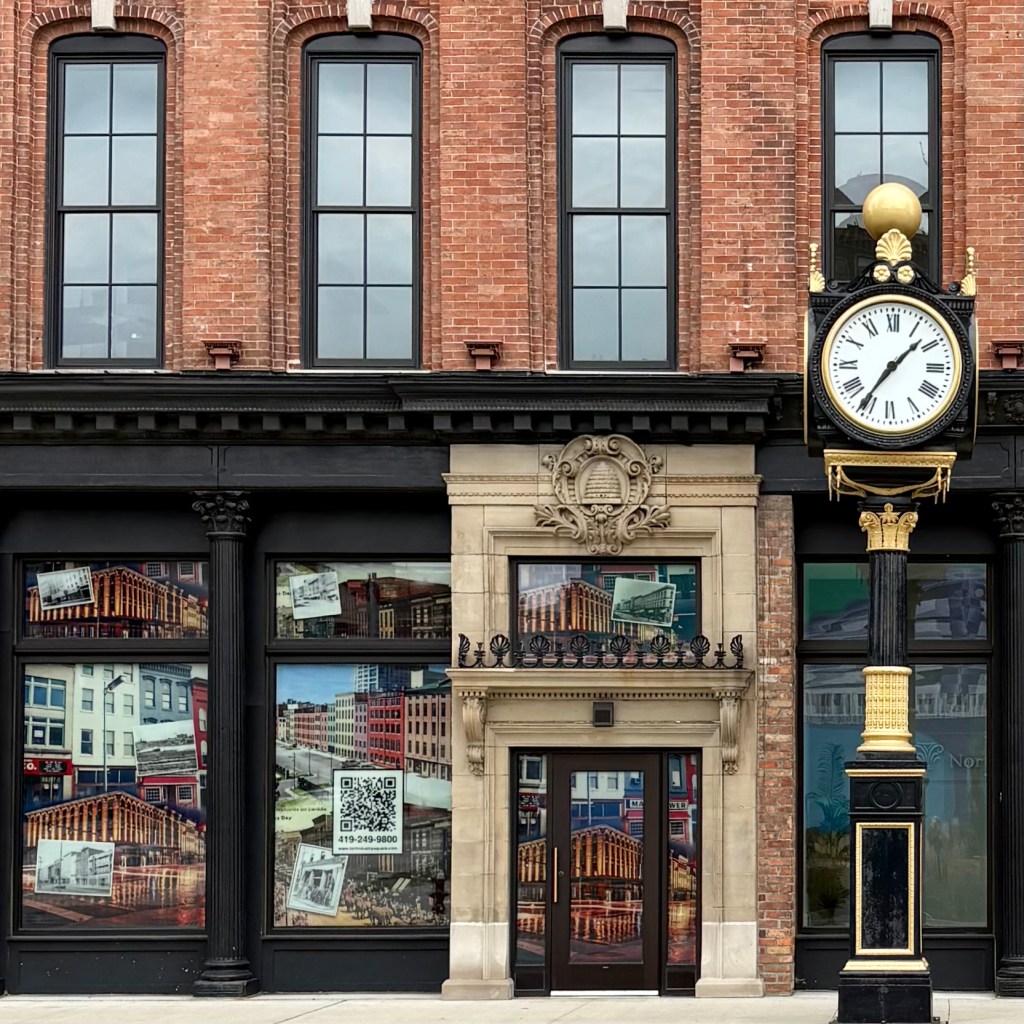
That row of abandoned building across from the hotel is beautifully restored and it houses a coffee / juice bar and a record (vinyl) shop. The floors above are loft apartments. The abandoned hotel missing the curtain wall – demolished and in its place a plaza for the convention center, which has also been renovated.
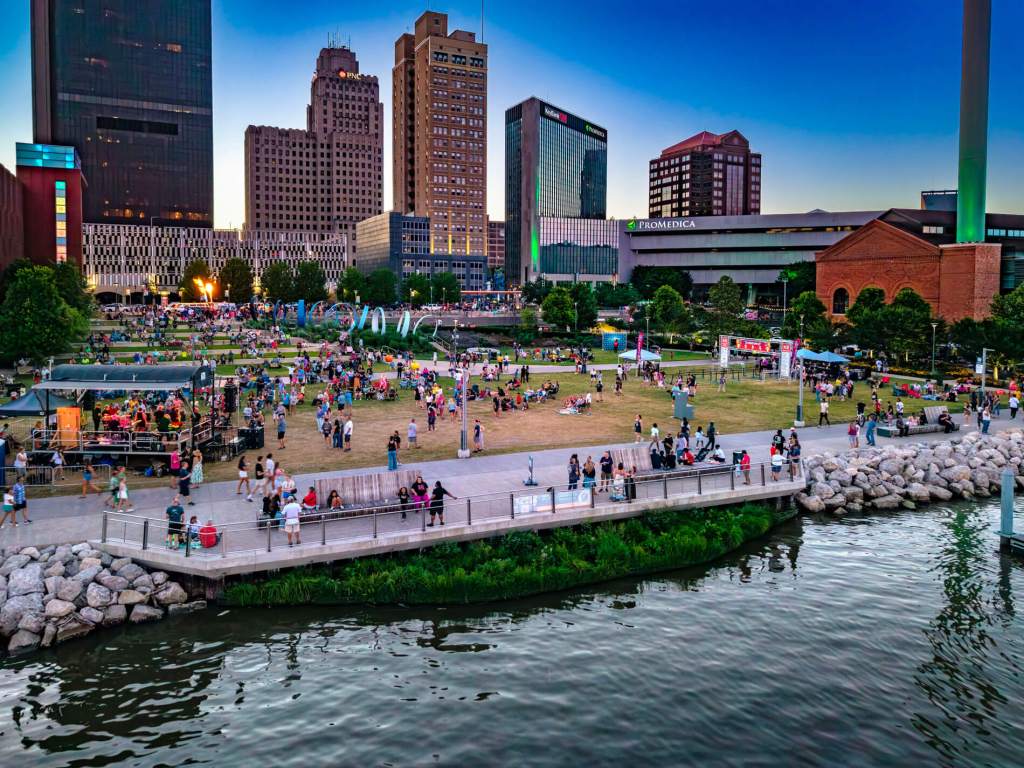
MetroParks, the city’s park division, has invested millions into renovating and expanding the River Walk. It now spans both sides of the river, includes a skating ribbon, stunning design elements, and it will continue to expand out from the downtown core. The port authority is making plans to expand so that Great Lakes cruise ships can dock downtown.
There is still a lot of work to be done. The ‘urban renewal’ plans of past generations have left surface parking lots where buildings once stood. Those that are left, of which there are still many, are being made ready for redevelopment. Four-hundred new apartments are scheduled to fill a couple of them. Another section of the former Fiberglass building has been transformed into modern living quarters.
Pilot projects in pivotal neighborhoods immediately adjacent to downtown are in place so that economic anchors can take root. These anchors are planned to eventually stitch themselves together to create new corridors of opportunity.
Lucas County, of which Toledo is the seat, has embarked upon a program of renovating homes and selling them. Vacant lots are being made available to neighboring parcels or sold, but only to those with immediate plans to build. The county also makes grant money available to small business owners for improving commercial properties.
In 1913 the Toledo Commerce Club embarked upon a competition to create a slogan for the city. The winning entry called for this to be the slogan. “You’ll do better in Toledo”. At the time and with the growth due to the glass industry and the soon to be Jeep empire, the slogan was accurate.
After nearly four decades of decline, the slogan feels relevant again. A few years ago Toledo was a blank slate. It’s changed but the opportunity seems boundless. The local population swarms whatever is new, and new business pop up almost monthly.
Ten years ago I would have never imagined saying this, but today, I am looking to give it a try beyond just the occasional weekend away. It is a small city where a little work goes a long way. It’s a big enough city with so much still in existence that as things continue to fill in it’ll continue on it’s path to greater vibrancy. It is exciting to witness these changes.
I still love Chicago and have no plans to leave. What I am looking forward to is having a little weekend place where I can do and experience something different. It’s an easy drive and with two trains a day, being able to spend time at a second home is a breeze.


Leave a Reply